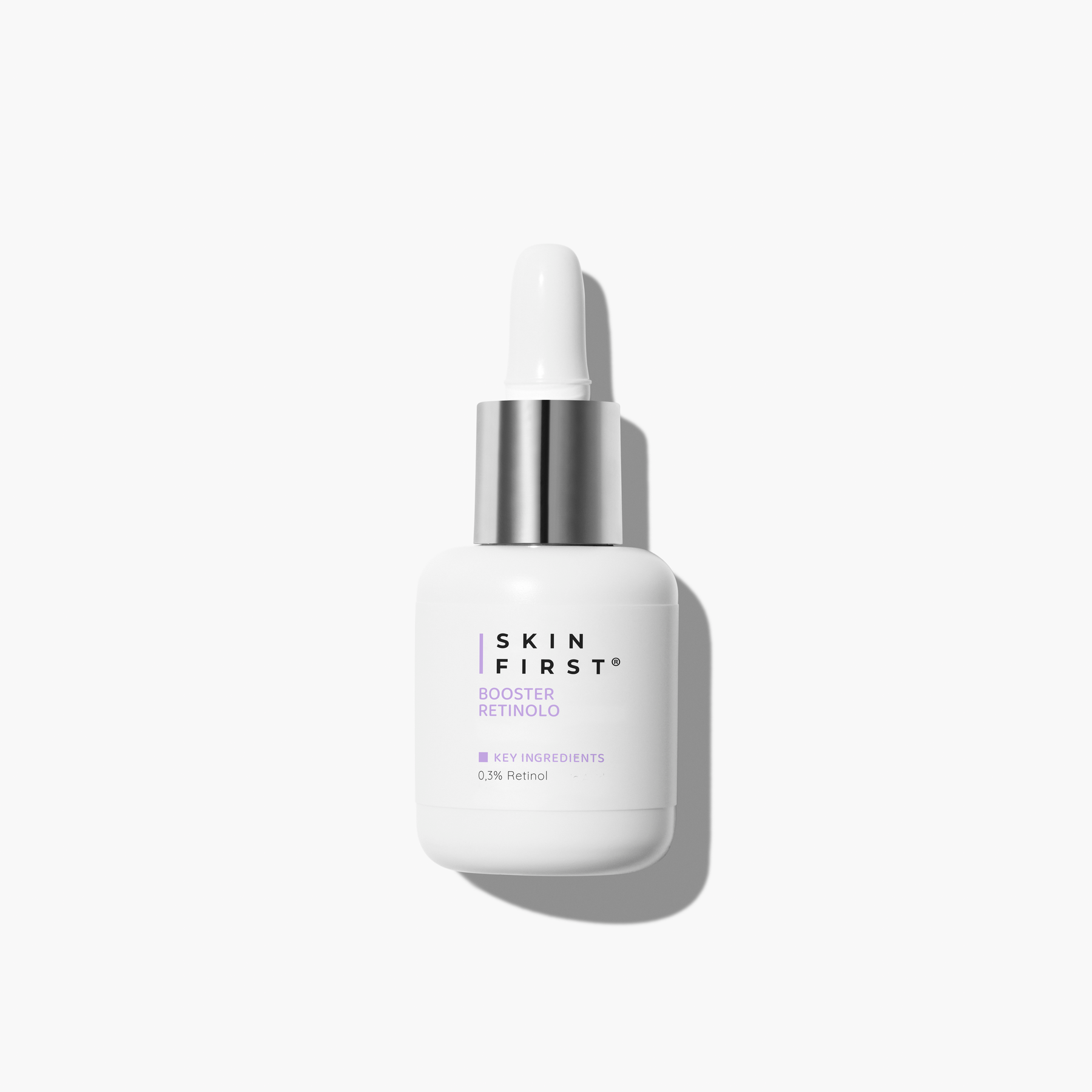
It is well documented that retinol is able to protect fibroblasts and other skin cells from oxidative damage caused by UV radiation and that it helps reduce melanocyte activity, a useful action in treating dark spots. Not to mention its sebum-regulating action and therefore its wide use in acne treatment as well.
How retinol works on facial skin
The mechanism of action of Retinol on facial skin unfolds at several levels. First of all, once applied to the skin, it is converted by skin cells into retinaldehyde and then into retinoic acid, its biologically active form.
This process stimulates cell regeneration and increases the production of collagen and elastin, essential components for young and healthy skin. Thanks to its ability to speed up cell turnover, it removes surface dead skin cells, promoting the emergence of newer, brighter, more even skin.
It is essential to gradually incorporate Retinol into your skincare routine to minimize side effects such as dryness or irritation, allowing the skin to progressively adapt to this powerful ally of skin beauty.
How to pair Retinol with other actives
Correctly combining Retinol with other skincare actives can greatly amplify the benefits for the skin, making a personalized and enhanced approach to facial care possible. Let’s explore together how to combine Retinol with Hyaluronic Acid, vitamin C and Salicylic Acid to maximize results and effectiveness while keeping skin healthy and radiant.
Retinol VS Hyaluronic Acid
Many people wonder whether Retinol or Hyaluronic Acid is better. Both have unique advantages, and the choice of which one to use depends solely on the specific needs of your skin. Retinol is a topical Vitamin A that can help reduce the appearance of wrinkles, age spots and other signs of skin aging. Hyaluronic Acid is a substance naturally present in the skin that helps maintain high hydration levels and keep the skin soft and smooth.
Is Retinol better or Vitamin C? Or can they be used together?
When talking about Retinol and Vitamin C, it is often not about choosing which one is better, but rather about understanding how they can work together to improve skin health. Retinol is known for its powerful anti-aging effect and its ability to promote cell renewal, while Vitamin C is renowned for its antioxidant properties, capable of protecting the skin from free radical damage and improving its radiance.
Used together, these two active ingredients can amplify their benefits: Retinol helps to build a strong, healthy foundation for the skin, preparing it to receive the maximum benefits of Vitamin C, which is best applied in the morning to benefit from its antioxidant action throughout the day.
Retinol and Salicylic Acid
The combination of Retinol and Salicylic Acid can be particularly effective for those dealing with issues related both to skin aging and to the presence of skin imperfections such as blackheads or acne. Salicylic Acid is a beta-hydroxy acid known for its exfoliating properties and its ability to penetrate clogged pores by removing excess sebum.
By using Salicylic Acid and Retinol in the same routine, you get a twofold effect: the Acid prepares the skin by removing dead cells and optimizing the absorption of Retinol, which in turn acts by promoting cell turnover.
However, this combination may be too intense for some skin types, especially at first; so it is best to start gradually and closely monitor your skin’s reactions, also considering alternating application days.
Warning! When should Retinol not be used?
- Unlike what many people think, retinol is not an exfoliant!
-
It should not be used during pregnancy, as absorbing too high a dose of Vitamin A could be harmful to the fetus.