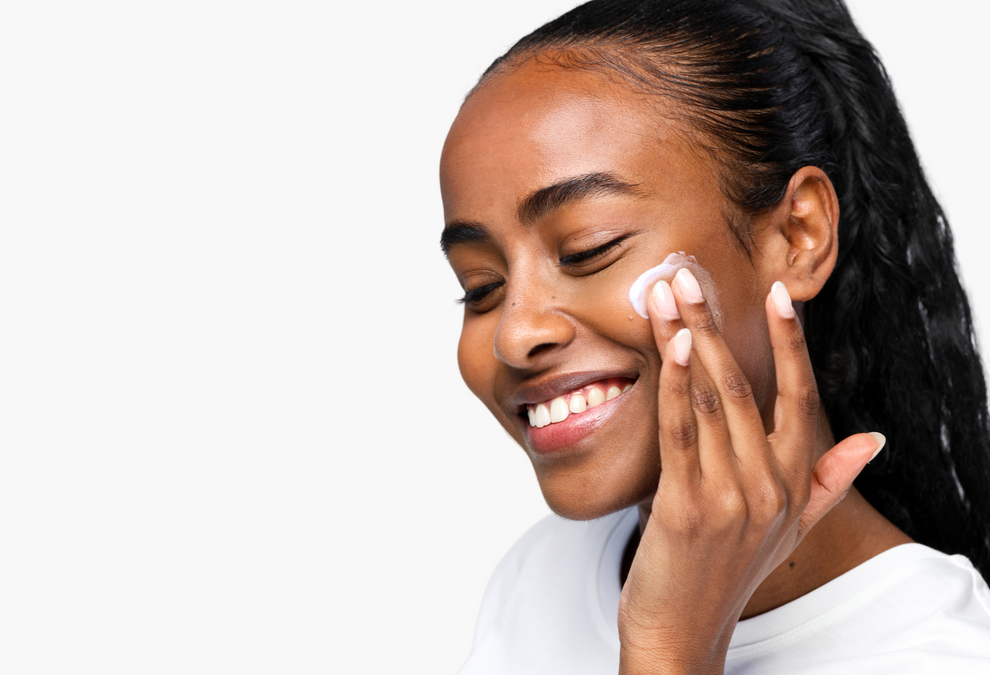
How to Prepare Your Skin for Seasonal Changes: Spring Skincare Routine
Why and how your Skin changes in spring
As temperatures rise, sebaceous glands reactivate and produce more sebum. If you have Combination skin or oily skin, your pores may look more enlarged, and the occasional pimple will start to reappear.
Along with temperature, light levels change too. The UV index in Italy as early as March can reach levels where sunscreen is no longer something to put off until summer. Yet this is one of the times it is most underestimated, precisely because spring sun doesn't "seem" aggressive.
Then there’s a dull complexion: your Skin looks gray, lacking luminosity, even after a full night’s sleep. Over the winter, cell turnover slows, dead cells build up on the surface, and microcirculation is less active. The result is a Skin that looks "dull" even if you’re doing everything right.
Last up is the skin barrier. After months of cold, wind, and dry air, it can end up weakened. In spring, it has to handle new stressors: temperature swings, pollen, and stronger UV rays. The result is a Skin that may be more reactive and sensitive than usual.
This is nothing out of the ordinary. It's seasonal change, and it happens to more people than you think.
How to adjust your skincare routine during seasonal changes
The most common question we get right now: do I need to switch up my entire skincare?
Not necessarily. But it’s worth checking if anything needs updating. If your Skin is sending you different signals than it did in the winter, listen to it. If everything still works, there’s no reason to change anything.
☀️ Spring skincare routine · Morning
1. Cleansing: the Gentle Face Cleanser works for most Skins in any season. If you notice your Skin tends to get oilier or breakouts appear, the Purifying Cleansing Mousse helps rebalance sebum without irritating your Skin.
2. Vitamin C in the morning: if you don’t already use it, spring is a great time to add it to your routine. It’s an antioxidant that supports your Skin against oxidative stress from UV rays and helps even out skin tone and restore luminosity to your complexion after the winter months. It is applied to cleansed Skin, before your moisturizer, like our Vitamin C Booster.
3. Face moisturizer: if your winter formula starts feeling too heavy, that doesn’t mean your Skin no longer needs hydration. It means it needs a different texture. The Preventive Face Cream offers daily hydration without weighing skin down. The Purifying Face Cream is best suited for when your Combination skin or oily skin starts to look greasy. And if your winter cream still works, keep using it.
4. SPF, every day, starting right now: this is the only non-negotiable point. Sunscreen should be applied whenever the UV index is 3 or higher, and we already hit those levels in Italy in spring. Last morning step. Every. Day.

🌙 Spring skincare routine · Evening
1. Double cleansing: if you wear sunscreen, double cleansing becomes important in the evening. The Olio Detergente Struccante Oil to Milk dissolves SPF, makeup and daily residues. Right after that, the Gentle Face Cleansercompletes cleansing without irritating.
2. Chemical exfoliation: dead skin cells that built up over winter don't go away on their own. The Skin Perfecting Toner with 2% Salicylic Acid is formulated for regular use. For a more intensive treatment, the AHA + BHA Exfoliant Peel, used once a week, improves skin texture, reduces the appearance of pores, and fades dark spots. Do not use them on the same day, and do not combine them with Retinol.
3. Evening booster: evening is the time for targeted active ingredients. Niacinamide + Azeloglicina if sebum production has reactivated and you notice breakouts. Retinol if you're working on wrinkles, dark spots or uneven texture. One rule: maximum one booster in the evening, one in the morning.
4. Face moisturizer: in the evening you can opt for a richer texture because you won't be layering SPF on top. The Nourishing Face Creamis a great option for this period: it deeply hydrates, has antioxidant action thanks to its adaptogen complex in the formula and helps support the skin barrier after the winter months.
Top ingredients and active ingredients recommended in spring (and why)
Not all active ingredients serve the same purpose at every time of year. These are the ones that work best in spring to address what is happening to your Skin.
- Vitamin C: antioxidant. Fights oxidative stress from UV rays, evens out skin tone and restores glow to dull winter complexions.
- Niacinamide: sebum-regulating, soothing and antioxidant. If your T-zone starts to shine again and your pores look more visible in spring, this is the right active ingredient. It also helps even out skin tone and reduce post-inflammatory hyperpigmentation.
- Salicylic Acid (BHA): liposoluble exfoliant. Penetrates pores and clears them from within. In spring, as sebum production reactivates, it helps prevent breakouts and blackheads before they form.
- AHAs (Glycolic, Lactic, Mandelic Acid): water-soluble exfoliants that work on the surface, speed up cell turnover, improve texture and restore glow.
In conclusion
Spring doesn’t require you to start over from scratch. It just requires awareness. Your Skin changes because your environment changes, and your skincare protocol must keep up. Don’t change everything all at once. Make one adjustment at a time, listening to what your Skin tells you. The best skincare routine isn’t the most complex one. It’s the one that makes sense for your Skin, right now.