
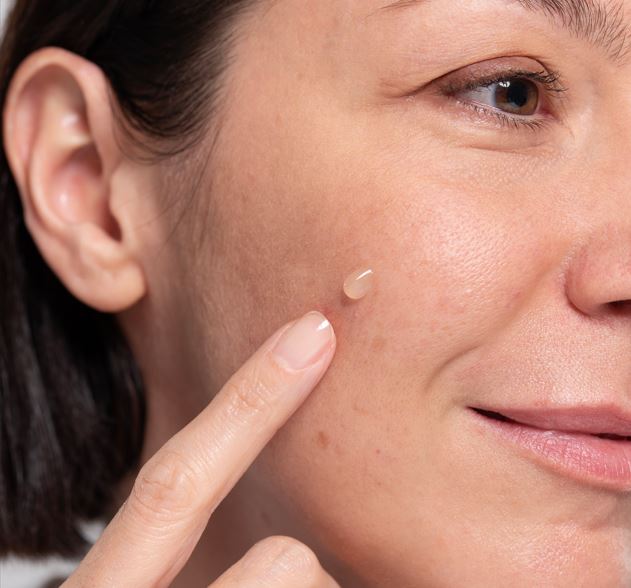
What sun spots are
Sun spots on the face, also known as solar freckles or solar lentigines, are pigmented skin lesions caused by prolonged exposure to the sun's ultraviolet (UV) rays.
They appear as flat, irregularly shaped spots that are light or dark brown, usually on the most exposed areas such as the face, hands, and décolleté.
As we age, the skin tends to develop more spots from the sun. To prevent them, it is important to use proper sun protection and reduce sun exposure. Dermatological treatments, such as lasers and brightening products, can help reduce their visibility.
How long do sun spots last?
Sun spots can vary in how long they last depending on several factors such as the extent of sun damage, the treatment used, and individual skin characteristics.
Without treatment, these spots can persist for months or even years, especially if the skin continues to be exposed to ultraviolet rays without adequate protection.
With appropriate dermatological treatments, it is possible to see a significant reduction in spots within a few weeks or months. However, it is essential to maintain good sun protection to prevent new spots from forming and to keep already treated ones from darkening again.
How to get rid of sun spots: creams, lasers, and other remedies
Sun spots on the skin can be reduced or removed through various dermatological treatments. Here are some common options:
- Brightening products: products containing ingredients such as Tranexamic Acid, Vitamin C or Hexylresorcinol can help lighten spots over time.
- Chemical peels: treatments that use acids (such as Glycolic or Salicylic Acid) to exfoliate the surface layers of the skin, promoting cell renewal and reducing hyperpigmentation.
- Laser therapy: the use of lasers to target and destroy pigmented cells without damaging the surrounding skin.
- Intense Pulsed Light (IPL): a treatment that uses high-intensity light beams to treat sun spots and other pigment irregularities.
- Microdermabrasion: a mechanical exfoliation technique that removes the outer layer of skin to encourage the growth of newer, more even skin.
It is advisable to consult a dermatologist to determine the most suitable treatment based on your skin type and the severity of the sun spots.
Here are 5 tips for achieving an even complexion, free of sun spots.
Recognizing the different types of sun spots
Not all spots are the same; some are darker, others more reddish.
The first are often caused by sun exposure, commonly called sun spots, or by aging or hormones; the second are the result of local inflammation such as a pimple or a small lesion and are commonly called acne scars or acne marks.
It is very important to identify your spots and understand whether they are actually sun spots so they can be treated properly.
Don't skip SPF
Exposure to UV rays stimulates melanin production and can lead to the formation of sun spots. Did you know that SPF should be worn all year round? Especially in the warmer months, you can't do without it if you want to limit the formation of new sun spots. SPF mode ON. Here you'll find all the facial sunscreens.
Exfoliate: your new mantra
Exfoliation, we know, is a key step in any skincare routine. Regular exfoliation stimulates cell turnover and removes the outermost layer of dead, dull cells , leaving your complexion glowing. A chemical exfoliation is definitely the most suitable option to soften and improve the appearance of spots. But remember to always use SPF if you expose yourself to the sun in the days after exfoliation.
Superhero Ingredients
If you want to treat spots, this is what you need to use! Here are some of the ingredients to include in your skincare routine to even out your complexion.
- Niacinamide: a multifunctional cosmetic ingredient with brightening action, able to block the transfer of melanin pigments to the more superficial cells of the stratum corneum. Useful for post-acne marks and sun spots.
- Tranexamic Acid: an active ingredient with an anti-plasmin effect, meaning it suppresses the enzyme that causes inflammation and blocks it to reduce pigmentation.
- Vitamin C: by reducing tyrosinase activity, it helps limit excessive melanin production, thus reducing the appearance of hyperpigmentation and dark spots.
- Hexylresorcinol: one of the most powerful tyrosinase inhibitors, a key enzyme in melanin synthesis. It is a highly valued functional ingredient in cosmetics for its brightening properties, useful for evening out the complexion.
- Retinol: a Vitamin A derivative, the holy grail of cosmetics, also useful for treating hyperpigmentation and giving the skin more radiance.
With these, you've got it made!
Be consistent!
The golden rule for any successful skincare routine is consistency: once you’ve found the routine best suited to your skin, follow it morning and evening and don’t let laziness get the better of you. The results will come!