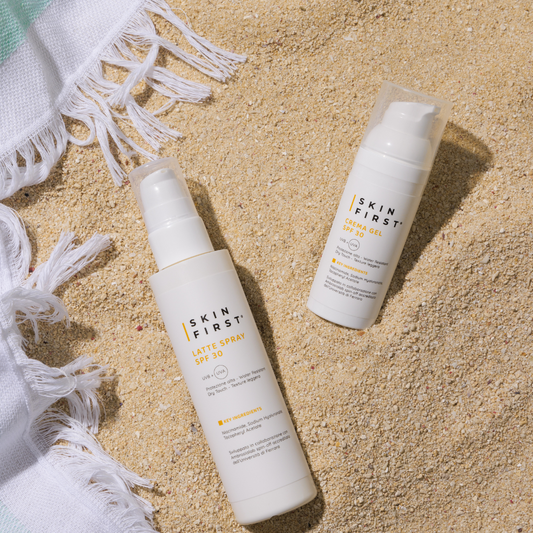
Skincare Products : Sunscreen

Why it's fundamental
Why do we insist so much on sun protection? Because the damage that UV rays can cause is numerous, irreversible, and often very serious: they are one of the main causes of wrinkles, cellular DNA damage, and skin cancer. So you’ll understand that protecting your skin (even in winter) brings countless benefits for your health.
Types of sunscreen filters
Sunscreens can be divided into two main categories:
- Physical filters (or inorganic or mineral): act as a screen that reflects UV rays, preventing them from penetrating the Skin. The most commonly used are titanium dioxide and zinc oxide.
- Chemical filters (or organic): act by absorbing UV rays, converting them into heat and releasing them from the Skin. The most commonly used chemical filters are octocrylene, ethylhexyl methoxycinnamate.
How to apply it
To get the most benefit from sun protection, it's important to apply it correctly to your clean and dry skin and reapply it every two hours or after sweating or getting wet.
What are the essential things you need to remember:
- Apply it even in winter if you are exposed to the sun;
- Apply it even when it's cloudy but you are outdoors: UV rays reach your skin even through clouds;
- Apply it even if you are under an umbrella: if clouds can't block UV rays, let alone an umbrella;
- Apply it multiple times throughout the day: it's hard (especially when wearing makeup) but necessary;
- Do not use it if it has exceeded the PAO (Period After Opening, the number of months from opening indicated on the packaging after which the product should no longer be used as its properties may have been altered);
- Check that it also protects against UVA rays.
Watch out for the UV index
To decide whether to use sunscreen or not, simply check the UV index: it is the ultraviolet exposure index, a scale that measures the amount of UV rays present in Earth's atmosphere. It is used to inform about the risks of sunburn and damage to the Skin:if it is equal to or higher than 3, it is always best to protect yourself with sunscreen, as well as wearing protective clothing such as hats and sunglasses, and trying to avoid sun exposure during the hottest hours.