Description of the Suffocating leather
How to Recognize Asphyxiated Skin
In addition to a dry skin surface, indicators of asphyxiated skin also include the presence of impurities and the feeling of tight skin after cleansing.
To conclude, it may be useful to know that this condition may be due to hormonal problems or the use of cosmetics that are not suitable for your skin type.
Remedies for Asphyxiated Skin: How to Treat It
Be careful not to focus on just one problem at a time: if you overuse sebum-regulating products, your skin could become too dry; if instead you focus only on hydration, your skin could become clogged. Manage these two issues well and find the balance your skin needs.
So, what should not be missing from your routine?
The ideal skincare for asphyxiated skin should be based on products that help regulate sebum as well as hydrate, to thin out the sebum and restore the skin's proper barrier. You should periodically carry out exfoliation to free trapped follicles, preferably with a lotion formulated with salicylic acid. You can then improve sebum regulation with active ingredients such as niacinamide. Finally, you should encourage hydration with ingredients that are not too rich, which could be heavy for pores that are already clogged: choose light formulations with hydrating ingredients to give moisture to your skin, which appears dehydrated on the surface.
The Most Common Needs of Asphyxiated Skin
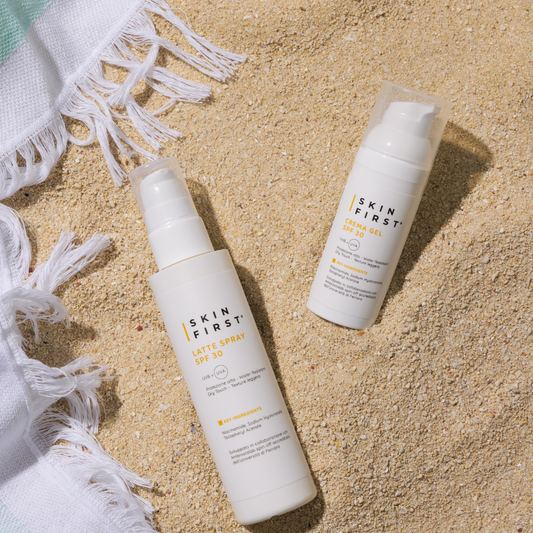
Asphyxiated skin can cause dryness, itching, redness, and blackheads. To treat asphyxiated skin, it is important to hydrate and protect the skin with moisturizing products and sunscreens.
- Blackheads: Blackheads (or open comedones) are a blockage that develops in the opening of hair follicles when sebum, keratin, debris, and bacteria build up. The brown, or black, color is due to the surface oxidation of the open comedone. You’ll find them in areas where the sebaceous glands are most active, generally around the nose and the outer cheeks.
- Whiteheads: A whitehead (closed comedone) is an acne lesion that forms when sebum and skin cells block the opening of the hair follicle. You’ll see it as a small whitish bump beneath the skin's surface.
- Skin Dryness: Does your skin feel tight? Does it look dull, lifeless, or cracked? Do you sometimes feel itchy? If you experience one of these symptoms, your skin, or parts of it, are suffering from skin dryness.